
One of the most common questions beginners ask is: How often should I do Pilates to see results?
Pilates is known for improving strength, posture, flexibility, and overall body awareness. However, like any form of exercise, results depend on consistency.
The good news is that you do not need to practice every day to benefit from Pilates. With the right schedule, even a few sessions per week can create noticeable improvements over time.
This guide will help you understand how often to practice Pilates based on your goals and experience level.
How many times per week should beginners do Pilates?
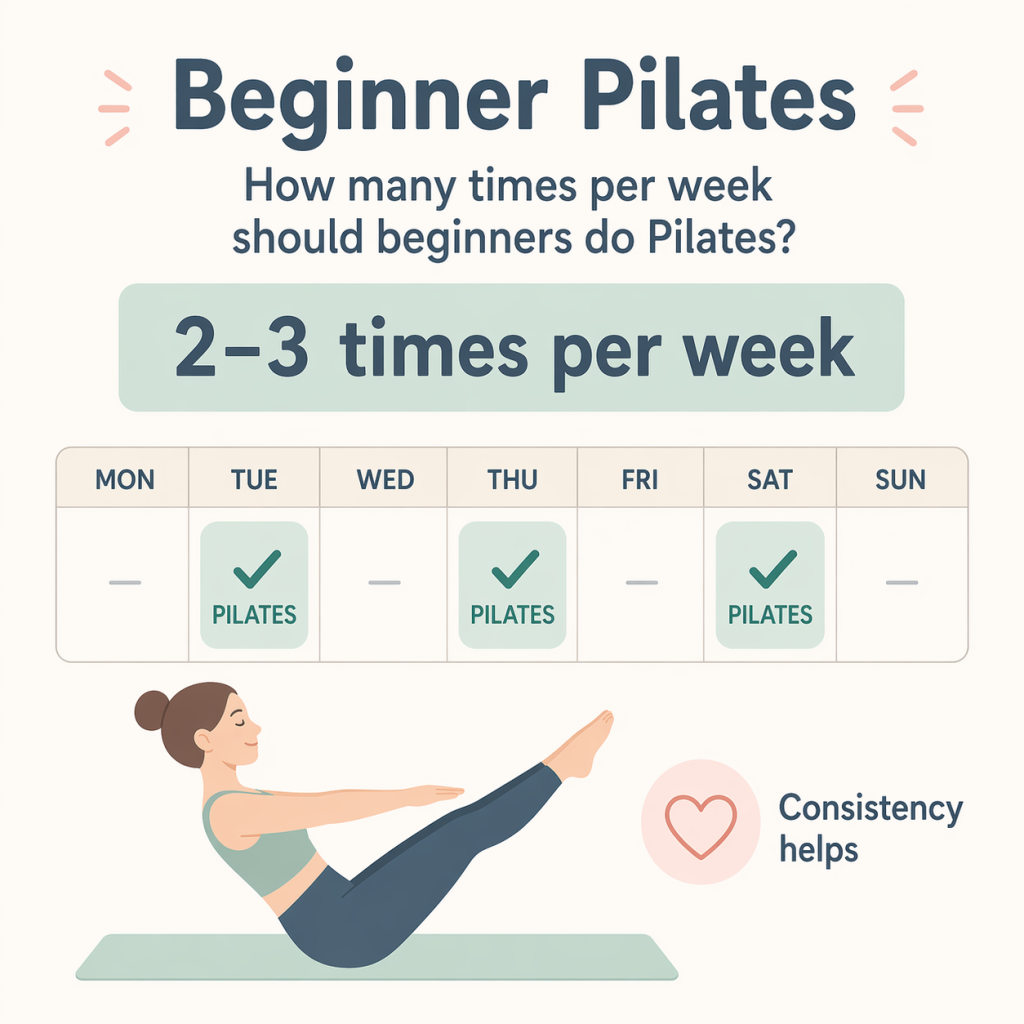
For beginners, practicing Pilates 2–3 times per week is usually recommended.
This frequency allows your body enough time to learn new movements and gradually build strength without feeling overwhelmed.
Pilates focuses on controlled movement and proper muscle activation. Your body needs time to adapt to these changes.
A balanced weekly schedule helps prevent fatigue while supporting steady progress.
Example beginner schedule:
• 2 sessions per week for gradual adaptation
• 3 sessions per week for faster improvement
Both options are effective when practiced consistently.
Is it okay to do Pilates every day?
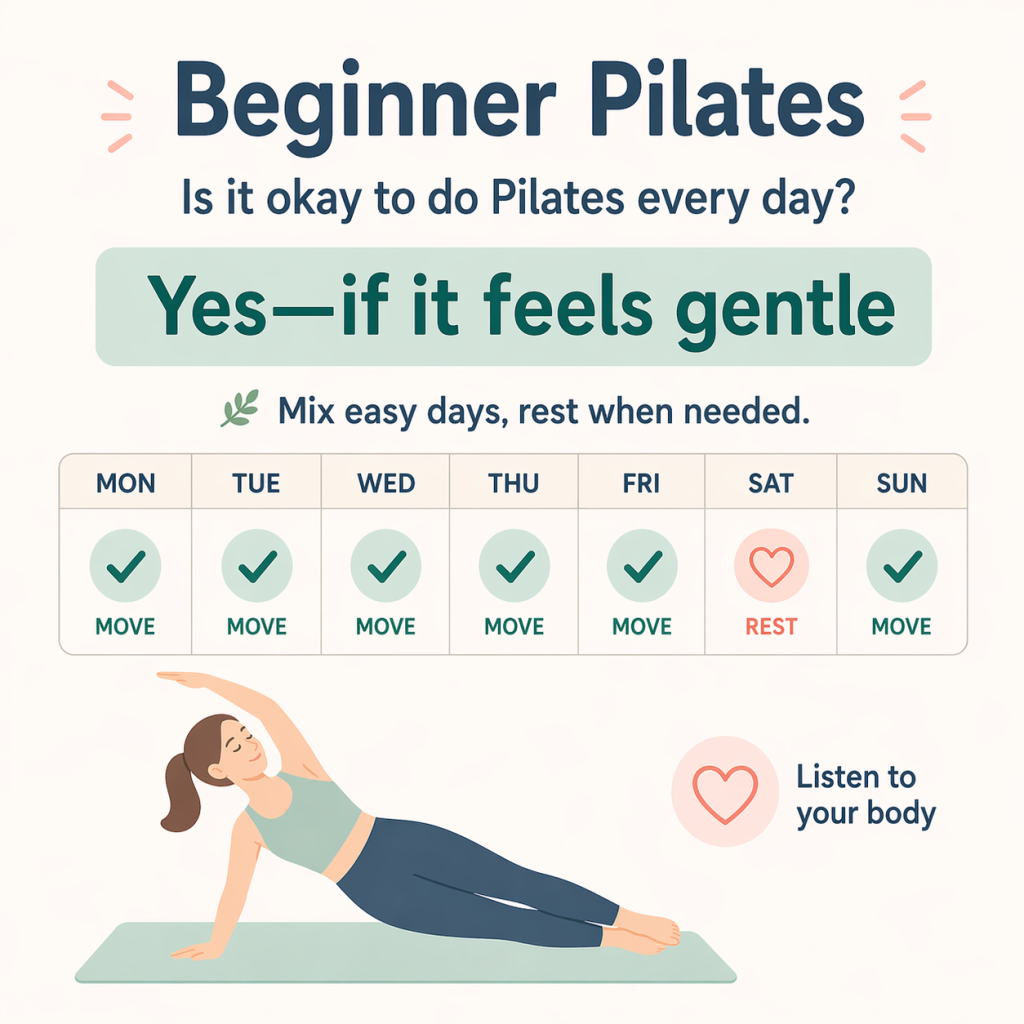
Yes, Pilates can be practiced more frequently because it is a low-impact exercise.
However, beginners may benefit from rest days between sessions, especially in the early stages.
Rest allows muscles to recover and become stronger.
As your body adapts, you may feel comfortable increasing frequency depending on your goals.
Listening to your body is important.
If you feel excessive fatigue, additional rest may be helpful.
How often should you do Pilates for different goals?
Your ideal schedule depends on what you want to achieve.
For general fitness and health
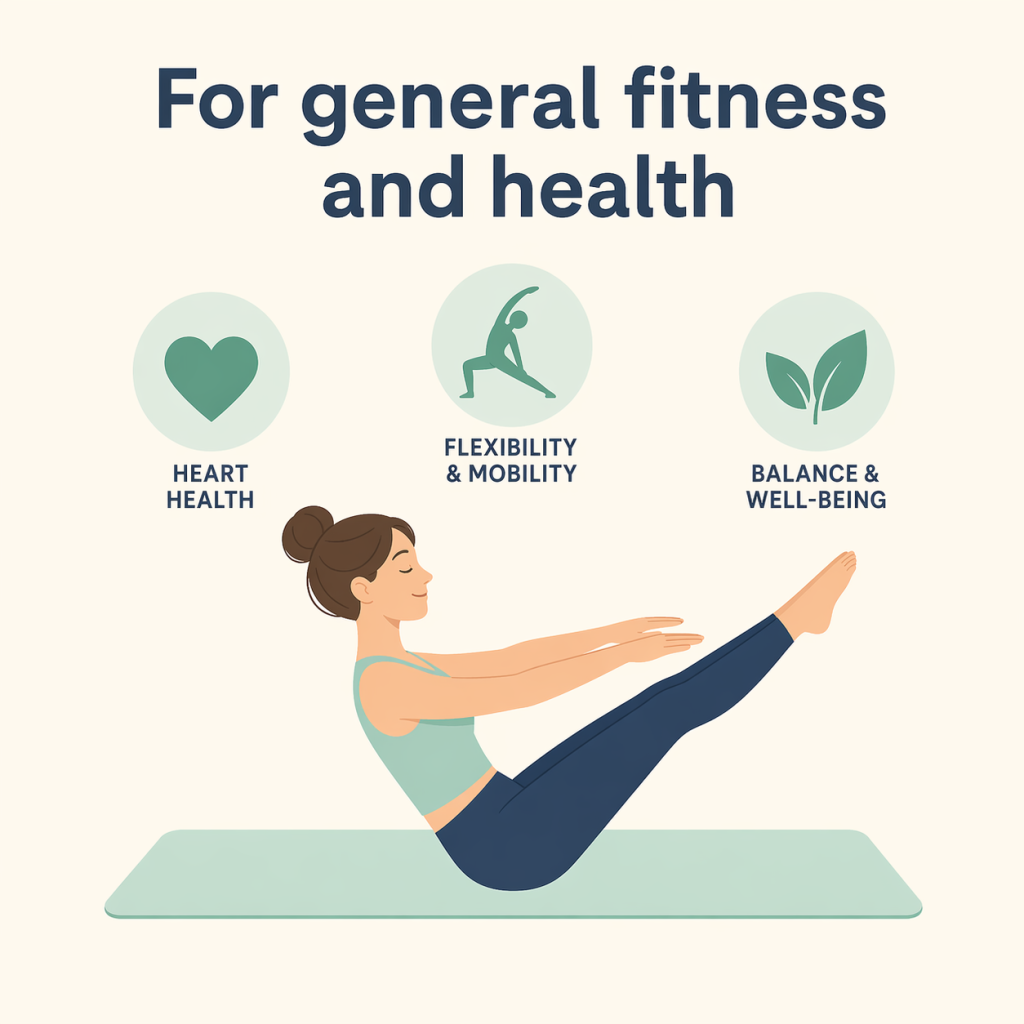
2–3 sessions per week is enough to improve strength, posture, and flexibility.
This schedule works well for most people who want to feel stronger and move better.
For posture improvement
3 sessions per week can help improve muscle balance and spinal alignment more efficiently.
Regular practice helps strengthen the muscles that support proper posture.
Many office workers benefit from consistent sessions.
For body toning
3–4 sessions per week may help develop lean muscle and improve body shape.
Pilates helps create long, balanced muscles rather than bulky muscle mass.
Consistency plays an important role in visible results.
For flexibility improvement
2–3 sessions per week can gradually improve mobility.
Flexibility improves over time through repeated controlled stretching and movement.
Patience is important.
For experienced practitioners
More experienced clients may choose to practice 4–5 times per week.
They often combine different types of sessions depending on their goals.
More frequent practice may provide faster progress when technique is already well developed.
How long does each Pilates session last?
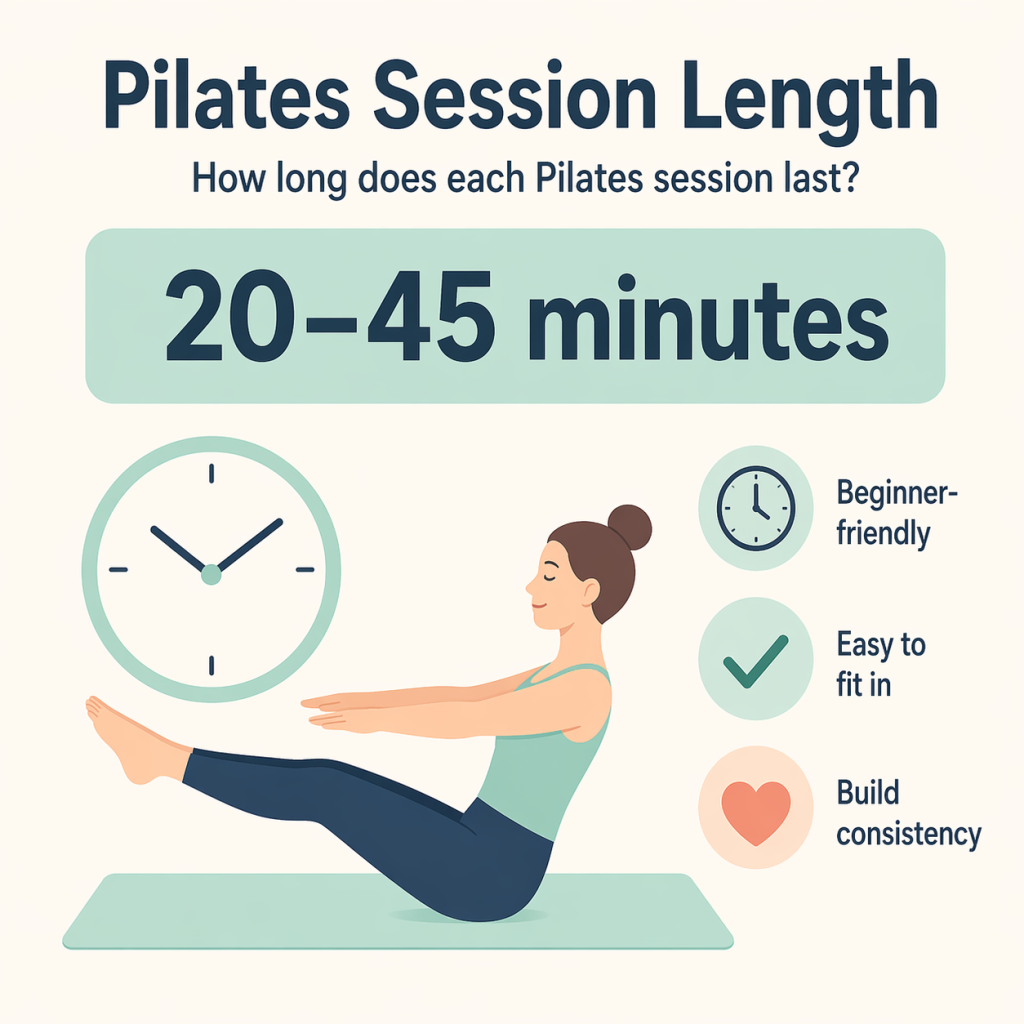
Most Pilates sessions last 45–60 minutes.
This duration allows enough time to warm up, strengthen muscles, and stretch safely.
Longer sessions are not always necessary.
Quality of movement is more important than session length.
When will you start to see results?
Many people begin to notice changes after 3–4 weeks of regular practice.
Common early improvements include:
• better posture
• stronger core muscles
• improved flexibility
• reduced muscle tension
• better movement control
Long-term results continue to develop with consistent training.
Pilates is most effective when practiced regularly over time.
Is consistency more important than intensity?
Yes. Consistency is one of the most important factors in Pilates.
Practicing regularly helps your body build strength gradually.
Pilates focuses on precise and controlled movement.
Even moderate sessions can produce results when performed consistently.
Small improvements over time create meaningful long-term changes.
Tips for creating a Pilates routine
Choose a realistic schedule
Start with a frequency that fits your lifestyle.
Be consistent
Regular practice leads to better results than occasional intense sessions.
Focus on proper technique
Controlled movement helps activate the correct muscles.
Allow time for recovery
Rest helps muscles adapt and grow stronger.
Track your progress
Notice improvements in posture, strength, and flexibility.
Sample weekly Pilates schedule
Beginner example:
Monday – Pilates session
Wednesday – Pilates session
Saturday – Pilates session
This schedule allows rest days between sessions.
Balanced routines support long-term success.
Final thoughts
Pilates does not require daily practice to be effective.
Most beginners see good results with 2–3 sessions per week.
Consistency, proper technique, and patience are key factors in achieving long-term improvement.
Over time, regular Pilates practice can help you feel stronger, improve posture, and move more comfortably.
A simple and consistent routine can create lasting benefits for both body and mind.