If you are new to exercise or looking for a gentle but effective way to improve your body, Pilates is one of the best places to start. Many beginners choose Pilates because it helps build strength, improve posture, and increase flexibility without putting too much stress on the joints.
Pilates focuses on controlled movements, proper breathing, and body awareness. Instead of fast or high-impact exercises, Pilates helps you develop strength step by step in a safe and sustainable way.
This beginner guide will help you understand how to start Pilates, what to expect, and how to get the best results.
What is Pilates?
Pilates is a low-impact exercise method designed to strengthen the core muscles, improve flexibility, and support better posture.
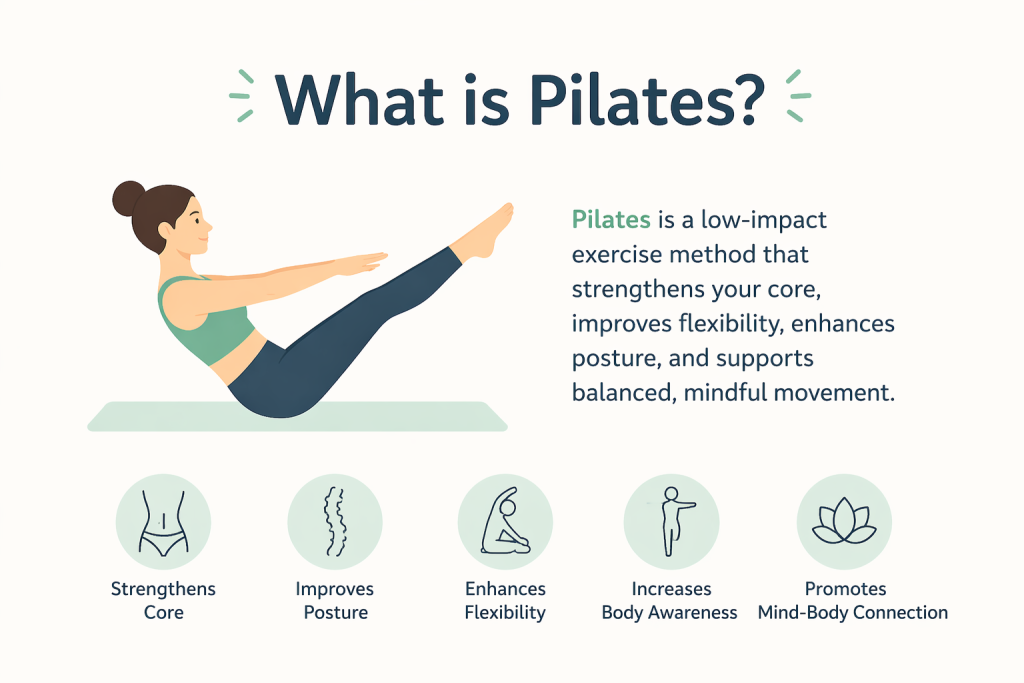
The core muscles include the abdomen, lower back, hips, and pelvis. These muscles help stabilize the body and support daily movements such as standing, walking, and lifting.
Pilates exercises are performed slowly and with control. The focus is on correct technique rather than speed or intensity.
Because of this, Pilates helps build balanced strength throughout the body.
Why Pilates is ideal for beginners
Pilates is suitable for beginners because it can be adjusted to match different fitness levels.
Exercises can be modified depending on your strength, flexibility, and experience.
Pilates is often recommended for people who:
• want to start exercising safely
• have not worked out regularly before
• want to improve posture
• feel stiffness in the body
• want to strengthen core muscles
• prefer low-impact exercise
Pilates helps build confidence because movements are guided step by step.
Types of Pilates beginners can try
Mat Pilates
Mat Pilates is performed on a comfortable exercise mat. It uses body weight as resistance to strengthen muscles.
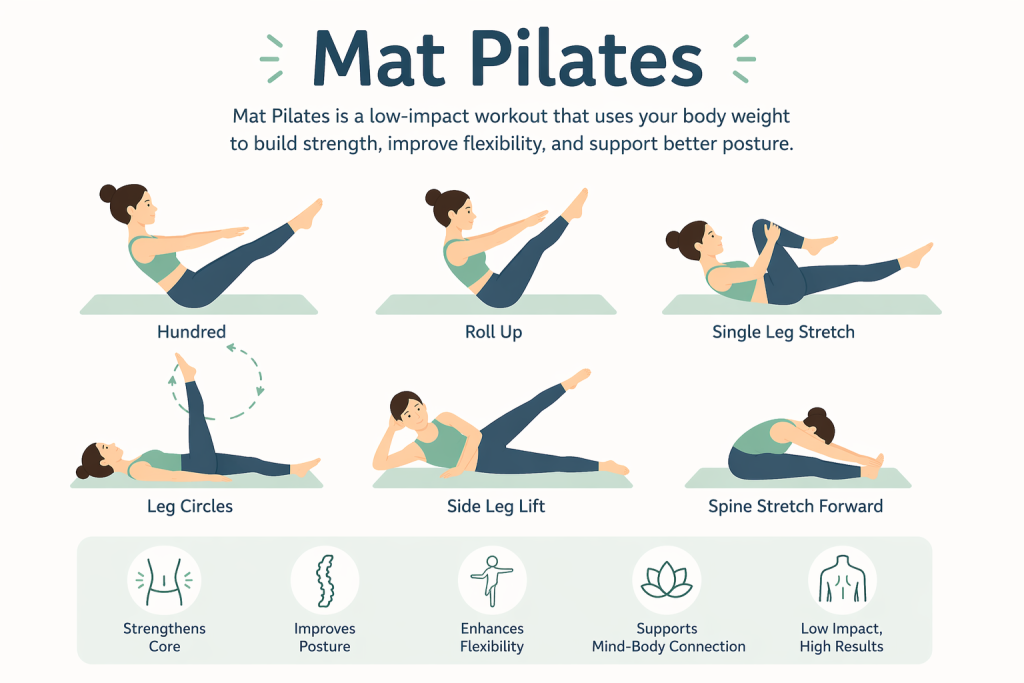
This type of Pilates is simple and accessible, making it a good starting point for learning basic techniques.
Reformer Pilates
Reformer Pilates uses specialized equipment that provides adjustable resistance.
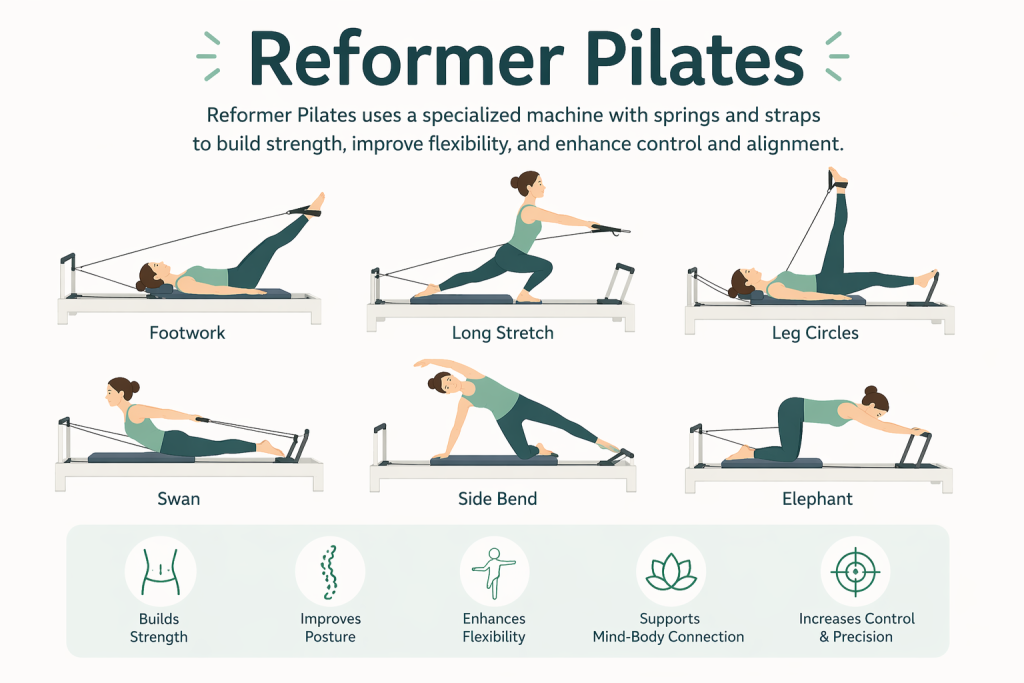
The reformer helps guide movement and provides support during exercises.
Many beginners find reformer sessions helpful because the machine assists with posture and alignment.
Reformer Pilates often makes it easier to understand how to engage the correct muscles.
What to expect in your first Pilates class
A typical beginner session usually lasts between 45 and 60 minutes.
The class often includes:
• gentle warm-up exercises
• breathing practice
• basic core strengthening movements
• flexibility exercises
• guided instructions from the instructor
Instructors explain how to perform each movement safely and correctly.
You are not expected to perform perfectly in your first class.
Learning proper technique takes time.
What to wear to a Pilates class
Choose comfortable clothing that allows free movement.
Clothes should not be too loose because instructors may need to observe posture and alignment.
Common choices include:
• comfortable workout top
• leggings or flexible pants
• non-slip socks (for reformer classes)
Comfort helps you focus on movement.
How often should beginners practice Pilates?
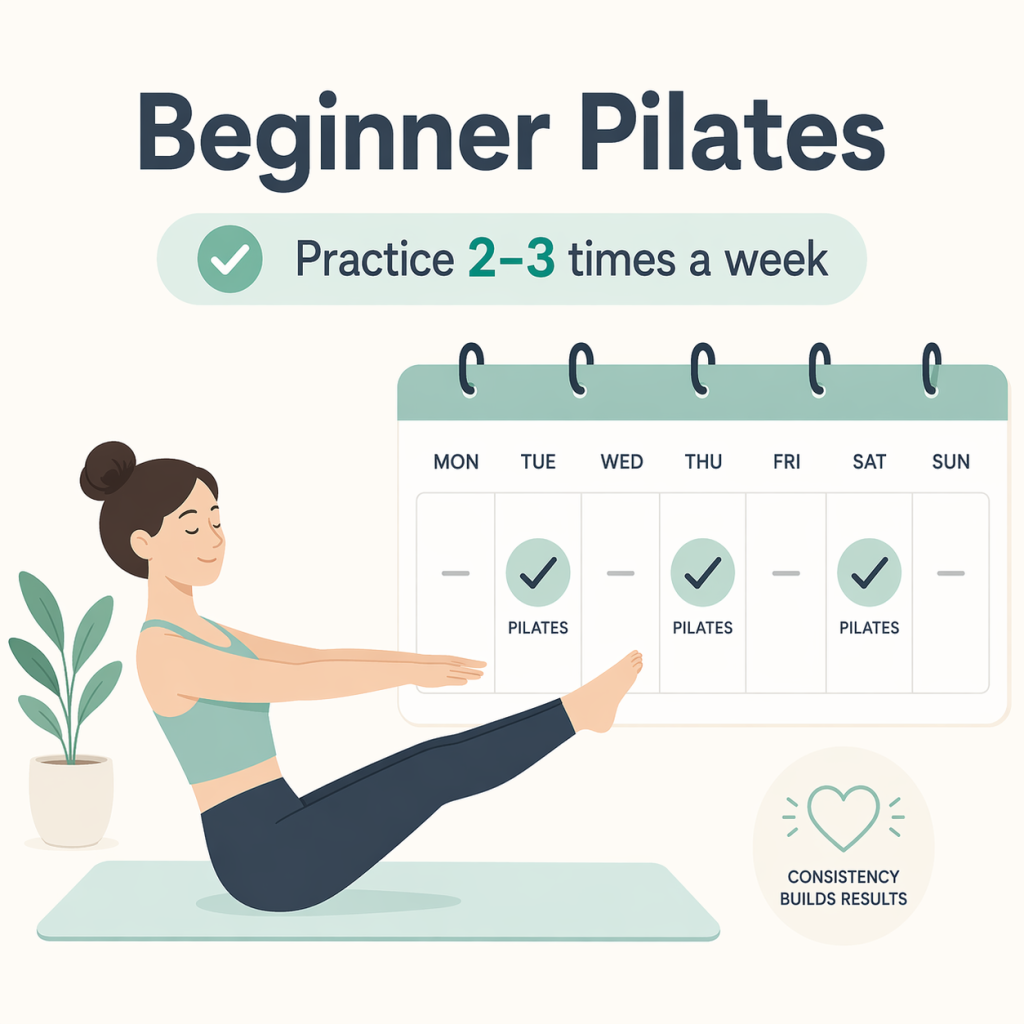
Most beginners start with 2–3 sessions per week.
Regular practice helps the body adapt gradually and build strength safely.
Consistency is more important than doing too many sessions in a short time.
Steady progress leads to better long-term results.
How long does it take to see results?
Many beginners begin to notice changes within a few weeks.
Early improvements may include:
• better posture
• stronger core muscles
• improved flexibility
• less muscle tension
• better body awareness
Visible physical changes may take longer, but regular practice helps build lasting results.
Tips to help beginners succeed in Pilates
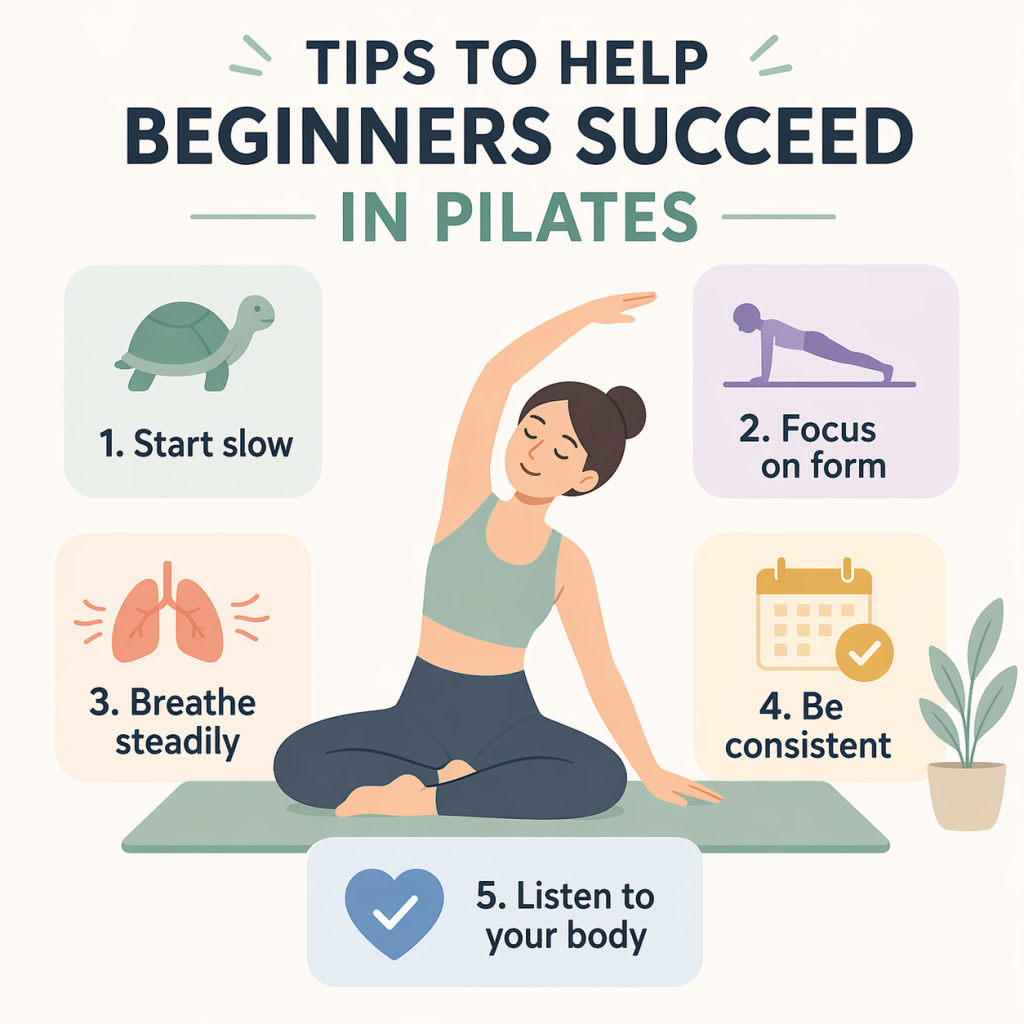
Start slowly
Give your body time to learn new movements.
Focus on technique
Correct form helps prevent discomfort and improves results.
Breathe consistently
Breathing helps support muscle control and concentration.
Be patient
Strength and flexibility improve gradually.
Practice regularly
Consistency helps the body become stronger over time.
Ask for guidance
Instructors are there to help you learn safely.
Common beginner concerns
Some beginners worry that they are not flexible enough or strong enough to start Pilates.
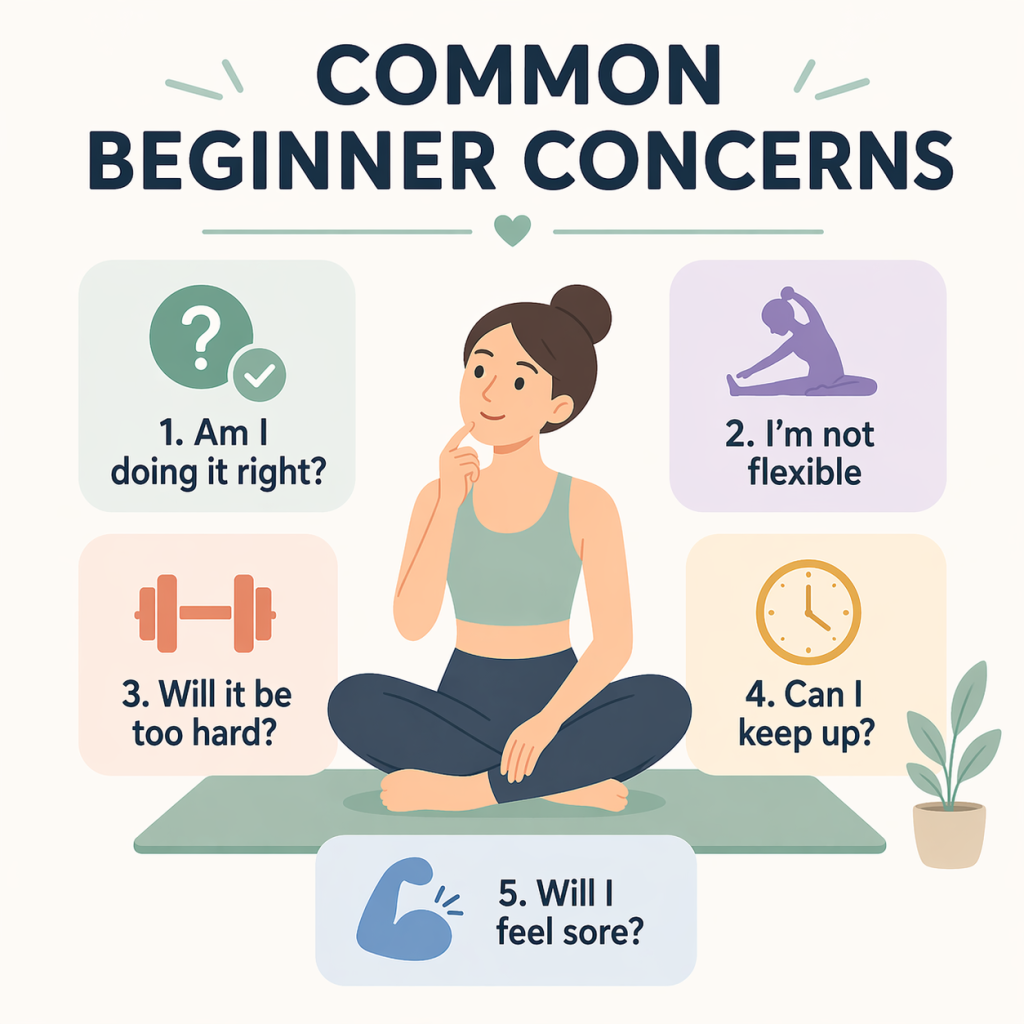
Pilates is designed to help improve strength and flexibility step by step.
You do not need prior experience.
Many people start Pilates to improve their current condition.
Progress happens gradually with regular practice.
Who should start Pilates?
Pilates is suitable for many people, including:
• beginners starting a fitness routine
• office workers who sit for long periods
• people who want to improve posture
• individuals looking for low-impact exercise
• people who want balanced strength
• anyone interested in long-term health
Pilates can be adapted to match different goals.
Final thoughts
Pilates is a safe and effective way to begin improving strength, posture, and flexibility.
It focuses on controlled movement and gradual progress, making it ideal for beginners.
With consistent practice, many people feel stronger, more balanced, and more confident in their bodies.
Starting Pilates can be the first step toward a healthier and more active lifestyle.