Poor posture is one of the most common problems today. Long hours sitting, using phones, and working on computers can cause the body to fall into unhealthy positions.
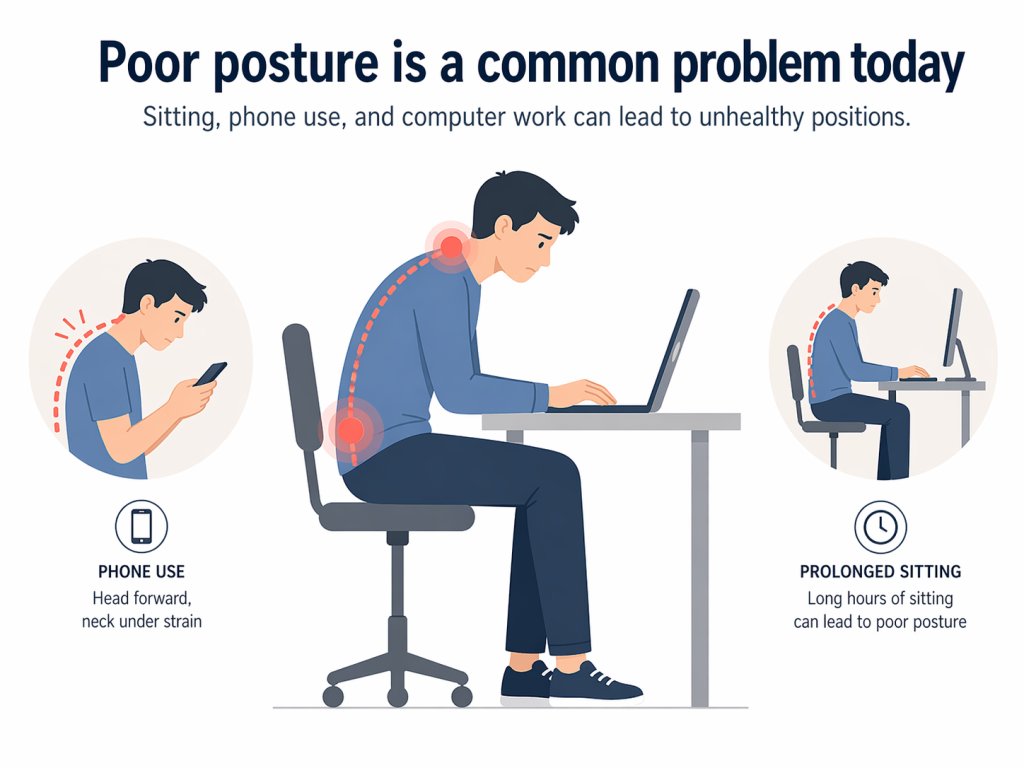
Over time, this can lead to:
• neck and shoulder tension
• lower back discomfort
• rounded shoulders
• reduced mobility
• fatigue
Pilates is one of the most effective ways to improve posture because it strengthens the muscles that support proper alignment and teaches the body how to move correctly.
What is good posture?
Good posture means your body is aligned in a natural and balanced position.
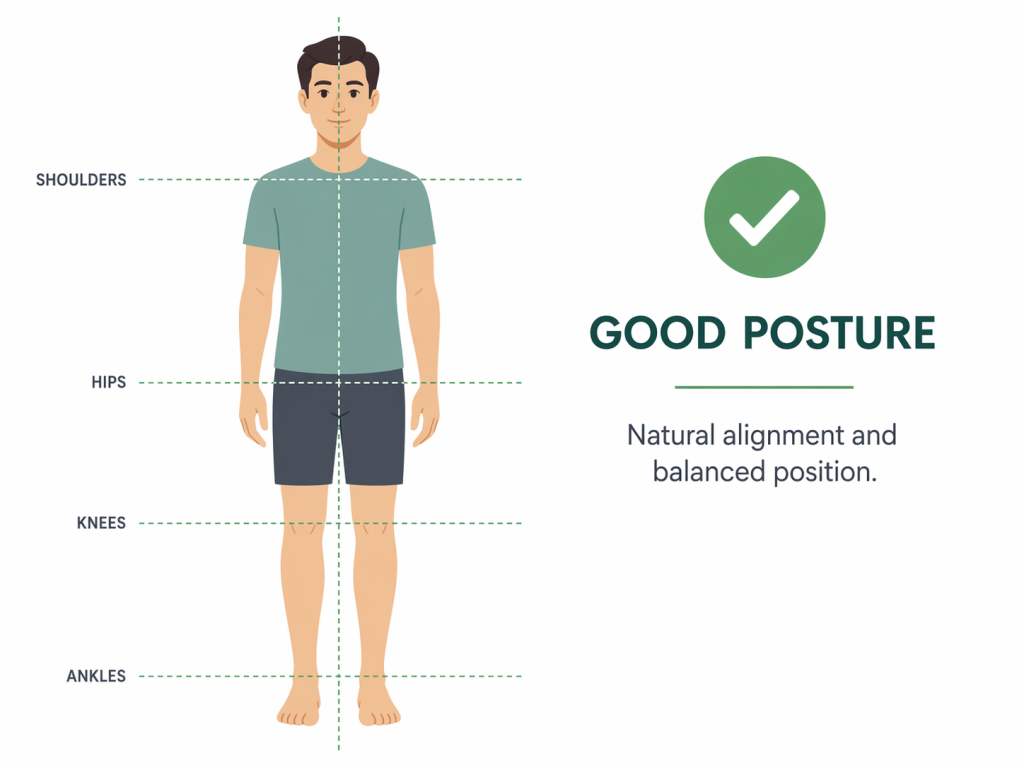
When standing, proper posture includes:
• head aligned over shoulders
• shoulders relaxed, not rounded forward
• chest open
• spine in a neutral position
• weight evenly distributed
When sitting, proper posture includes:
• feet flat on the floor
• back straight and supported
• shoulders relaxed
• screen at eye level
Good posture reduces unnecessary strain on muscles and joints.
Why posture becomes poor
Modern lifestyle habits often lead to poor posture.
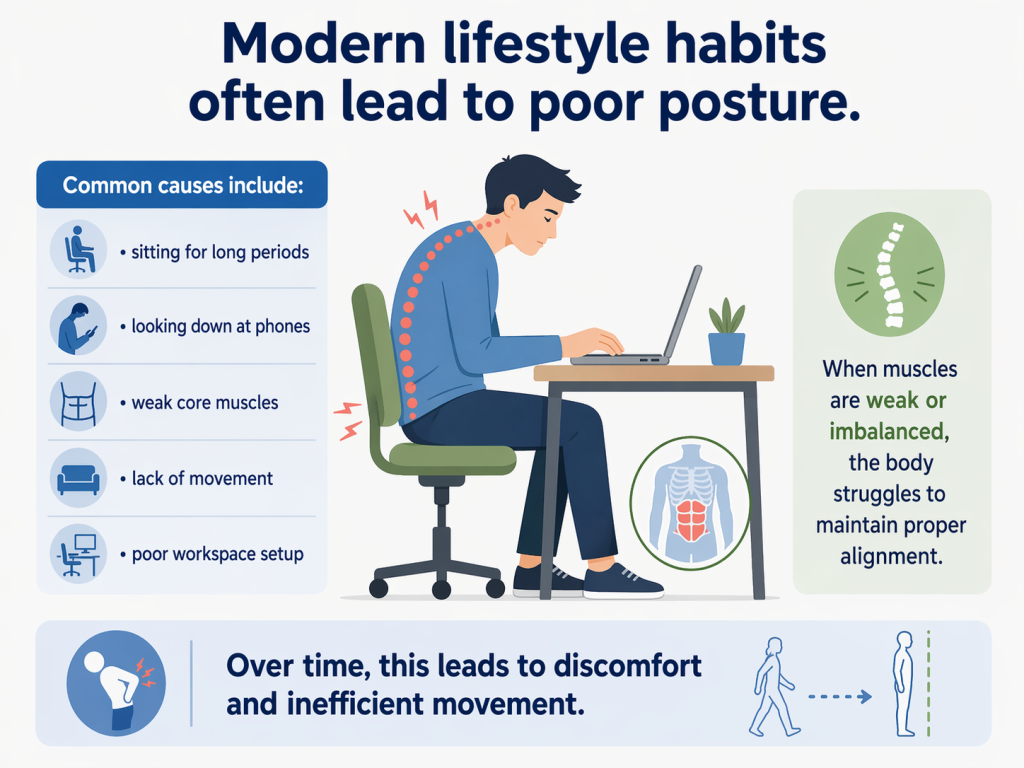
Common causes include:
• sitting for long periods
• looking down at phones
• weak core muscles
• lack of movement
• poor workspace setup
When muscles are weak or imbalanced, the body struggles to maintain proper alignment.
Over time, this leads to discomfort and inefficient movement.
How Pilates improves posture
Pilates focuses on strengthening the muscles that support the spine and improving body awareness.
Here’s how it helps:
1. Strengthens the core
The core muscles are responsible for stabilizing the spine.
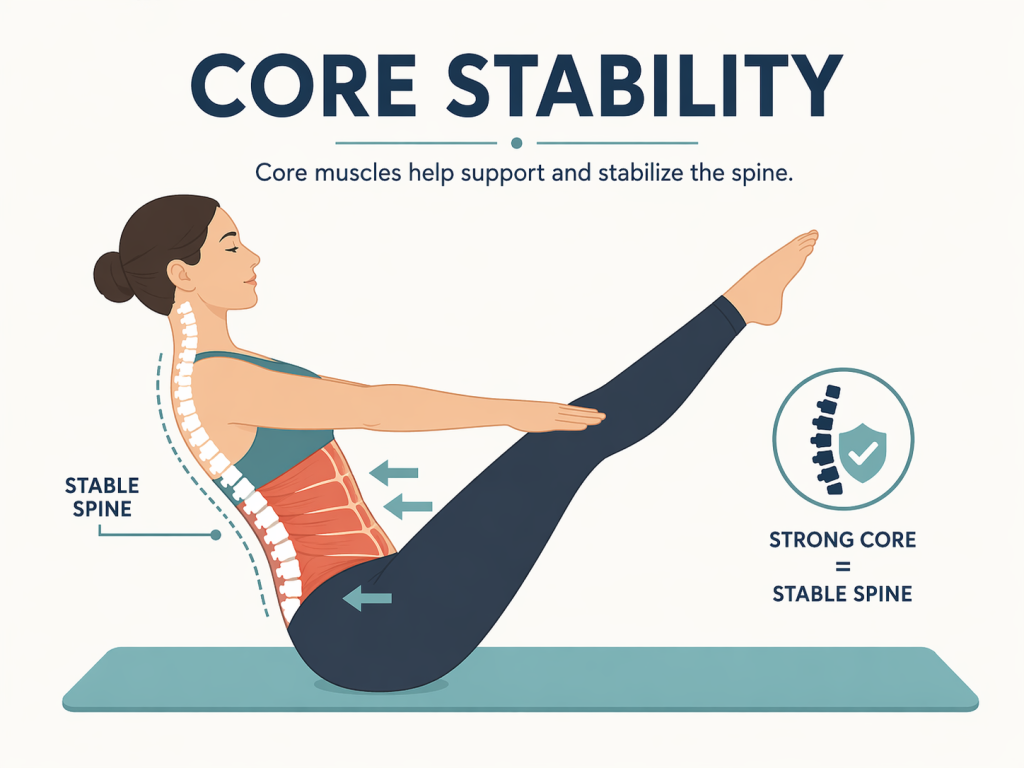
Pilates activates deep muscles in the abdomen and lower back, helping the body stay upright with less effort.
A strong core makes it easier to maintain good posture throughout the day.
2. Improves spinal alignment
Pilates teaches neutral spine positioning.
Through controlled exercises, the body learns how to align the spine correctly.
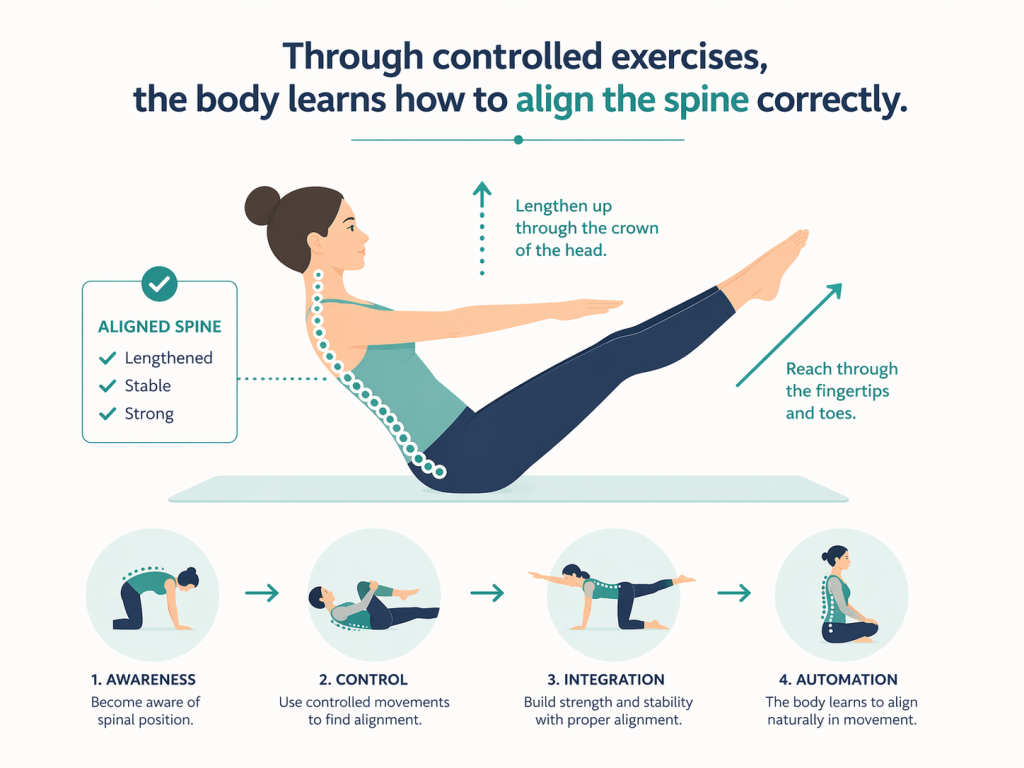
Better alignment reduces pressure on joints and muscles.
3. Opens the chest and shoulders
Many people develop rounded shoulders from sitting and using devices.
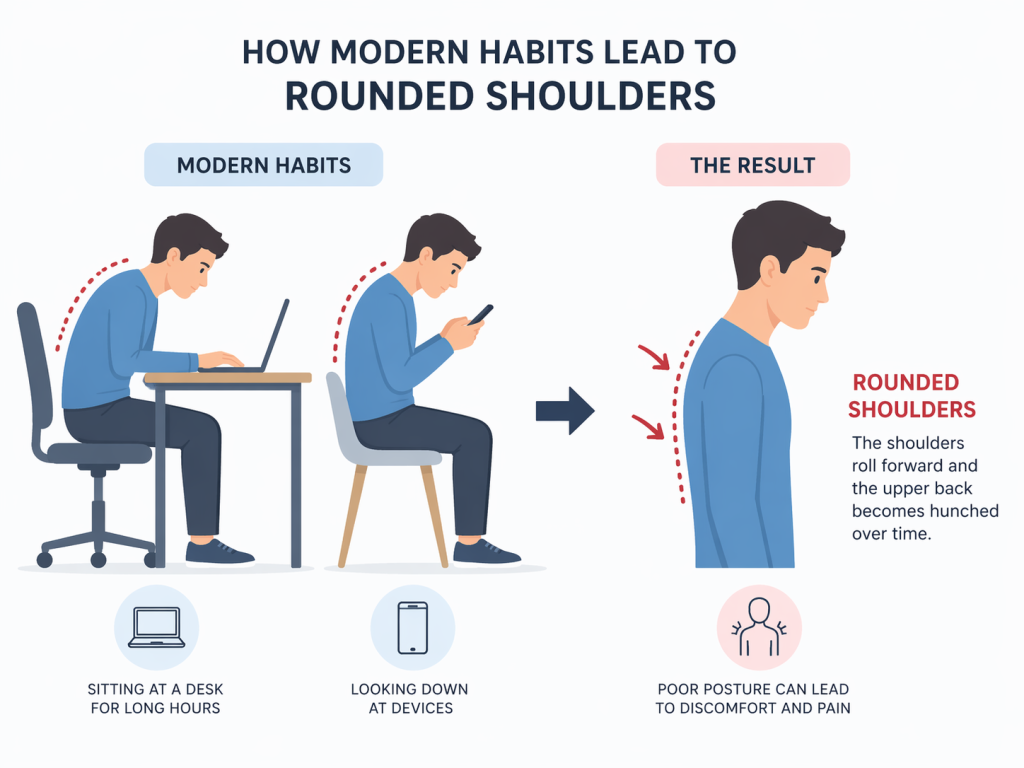
Pilates includes movements that:
• open the chest
• strengthen upper back muscles
• reduce shoulder tension
This helps create a more upright and confident posture.
4. Increases body awareness
Pilates trains you to notice how your body moves and holds itself.
This awareness helps you correct posture throughout the day, not just during exercise.
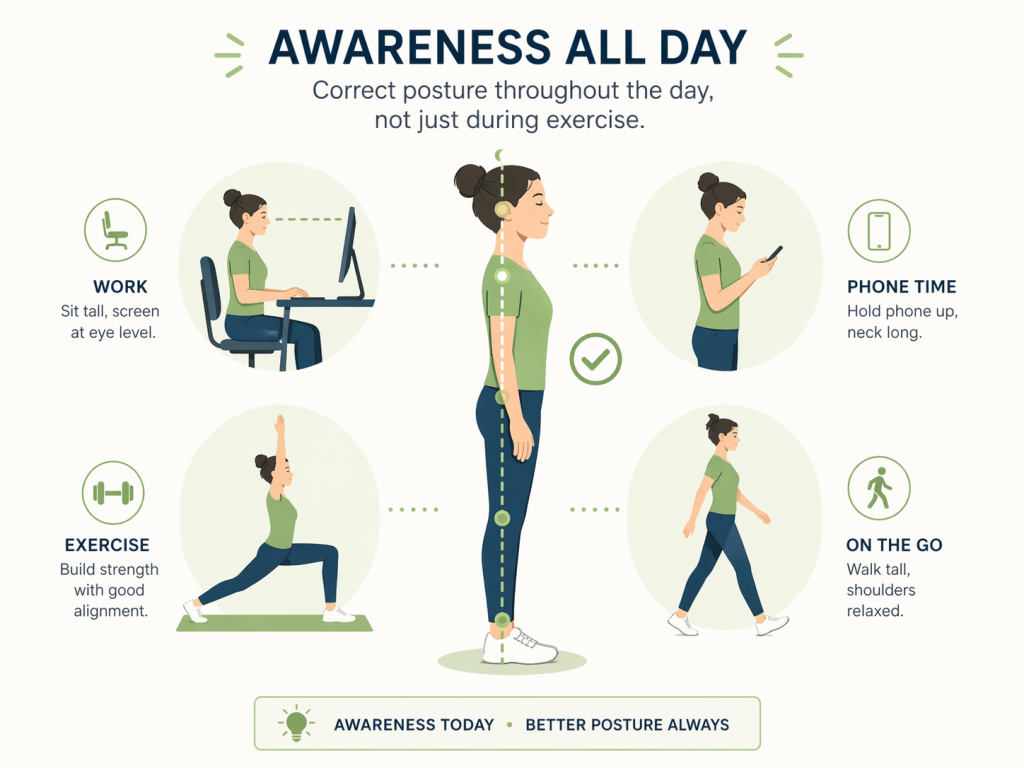
Over time, good posture becomes more natural.
5. Improves flexibility and mobility
Tight muscles can pull the body out of alignment.
Pilates helps release tension and improve flexibility, especially in:
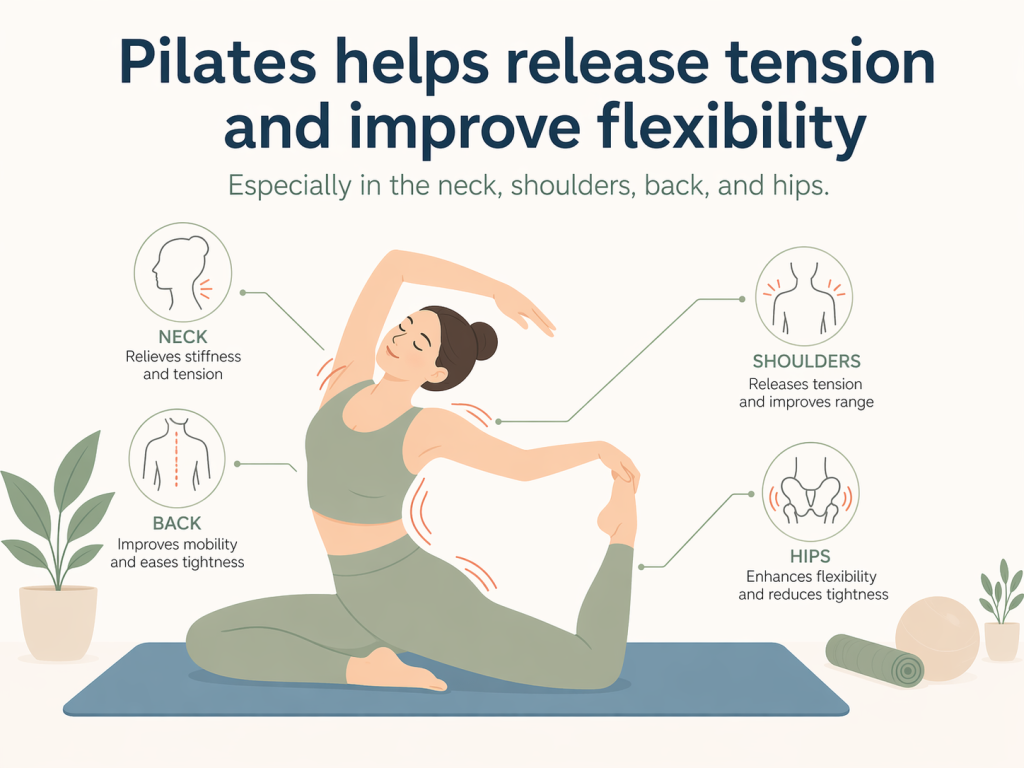
• hips
• lower back
• shoulders
Better mobility supports better posture.
Simple Pilates-based posture tips for daily life
You do not need to be in a class to start improving posture.
Here are simple habits you can apply every day:
When sitting
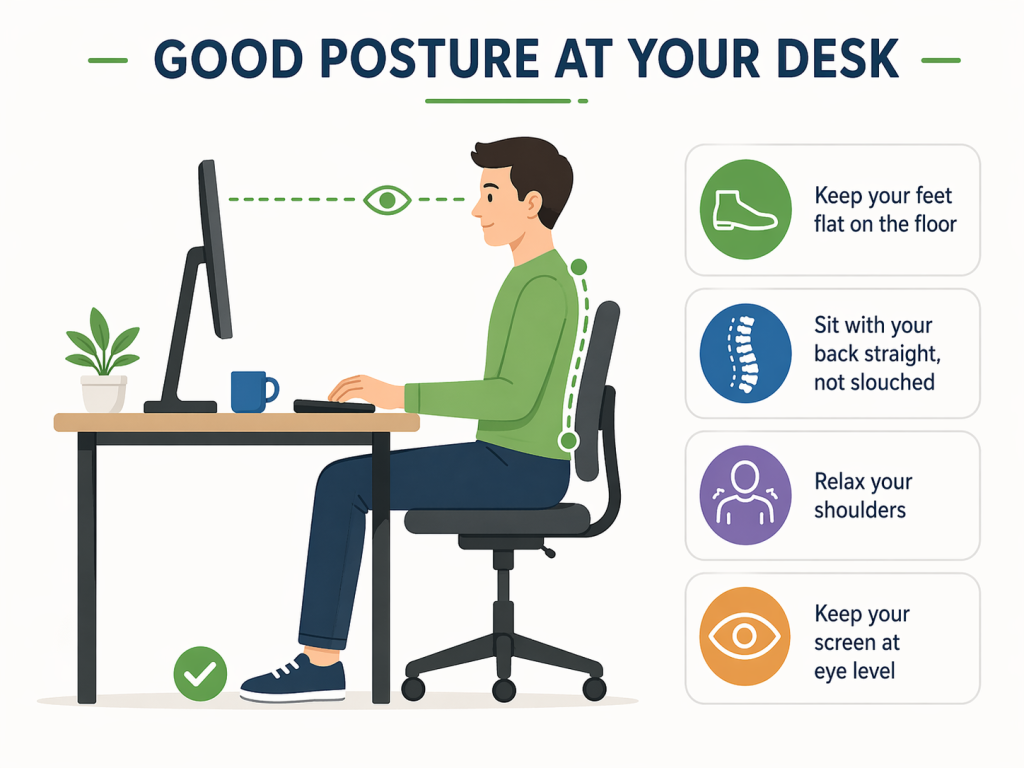
• keep your feet flat on the floor
• sit with your back straight, not slouched
• relax your shoulders
• keep your screen at eye level
Take breaks every 30–60 minutes to move and stretch.
When standing
• stand tall with your weight evenly distributed
• avoid locking your knees
• keep your shoulders relaxed
• engage your core gently
Imagine a string pulling the top of your head upward.
When using your phone
• avoid looking down for long periods
• bring your phone closer to eye level
• take regular breaks
Small adjustments can reduce strain on the neck.
How long does it take to improve posture?
Many people start to feel improvements within a few weeks of regular Pilates practice.
Early changes may include:
• reduced tension in neck and shoulders
• easier upright posture
• improved body awareness
Visible posture improvements usually develop over time with consistent practice.
How often should you do Pilates for posture?
For posture improvement, practicing Pilates 2–3 times per week is recommended.
Consistency helps strengthen the muscles needed to support proper alignment.
Even short sessions can make a difference when practiced regularly.
Who should focus on posture improvement?
Pilates is especially helpful for:
• office workers
• students
• people who sit for long hours
• individuals with neck or shoulder tension
• beginners looking to improve movement
Better posture supports overall health and comfort.
Final thoughts
Posture plays an important role in how the body feels and functions every day.
Pilates is one of the most effective ways to improve posture because it strengthens the core, improves alignment, and increases body awareness.
With consistent practice, many people feel more comfortable, more confident, and more balanced in their daily movement.
Improving posture is not about forcing the body into position. It is about building the strength and awareness needed to support natural alignment.