Pilates and yoga are two of the most popular low-impact workouts today. Both are known for improving flexibility, reducing stress, and helping people feel stronger and more balanced. Because they may look similar at first, many beginners often ask the same question: should I choose Pilates or yoga?
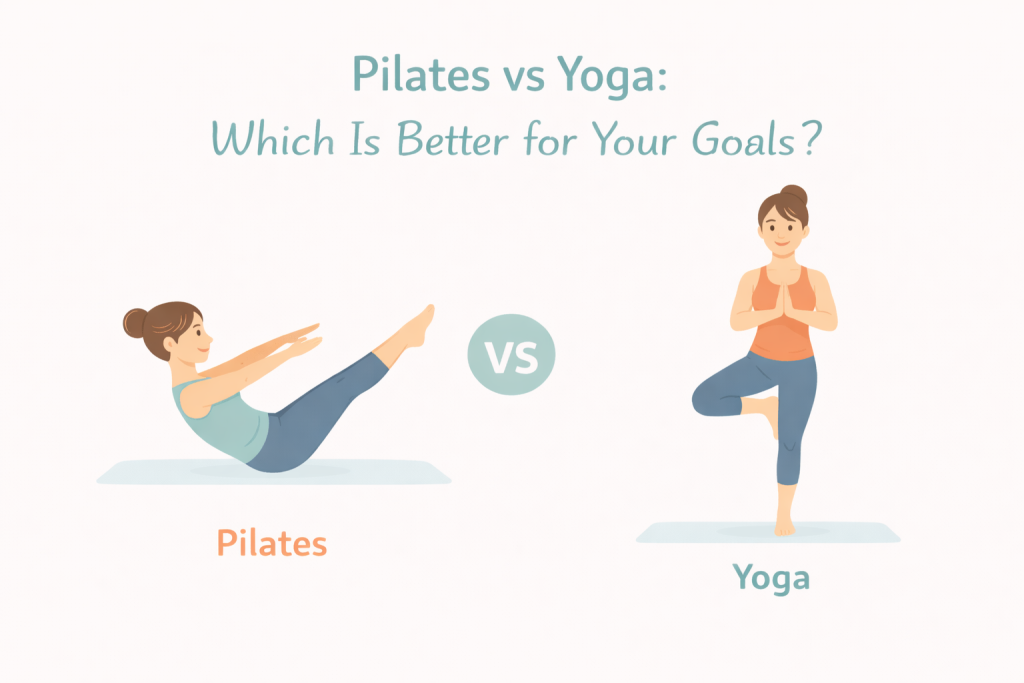
The truth is that both forms of exercise offer valuable benefits, but they are not exactly the same. Each one has a different focus, a different training style, and a different effect on the body.
If you are trying to decide which one is better for your goals, this guide will help you understand the key differences and choose the right option for your lifestyle.
What is Pilates?
Pilates is a low-impact exercise method that focuses on core strength, posture, body control, and alignment. It uses controlled movements and breathing techniques to strengthen the deep muscles of the abdomen, back, hips, and pelvis.
Pilates can be done on a mat or with specialized equipment such as the reformer. It is often chosen by people who want to improve posture, tone the body, and build strength without putting too much stress on the joints.
What is Yoga?
Yoga is an ancient practice that combines movement, breathing, and mindfulness. It includes a wide range of styles, from slow and meditative classes to more physically demanding sessions.
Yoga focuses not only on physical flexibility and strength, but also on relaxation, mental clarity, and inner balance. Many people practice yoga to reduce stress, improve mobility, and create a stronger connection between mind and body.
The main difference between Pilates and yoga
Although both Pilates and yoga involve controlled movement and breathing, their main goals are different.
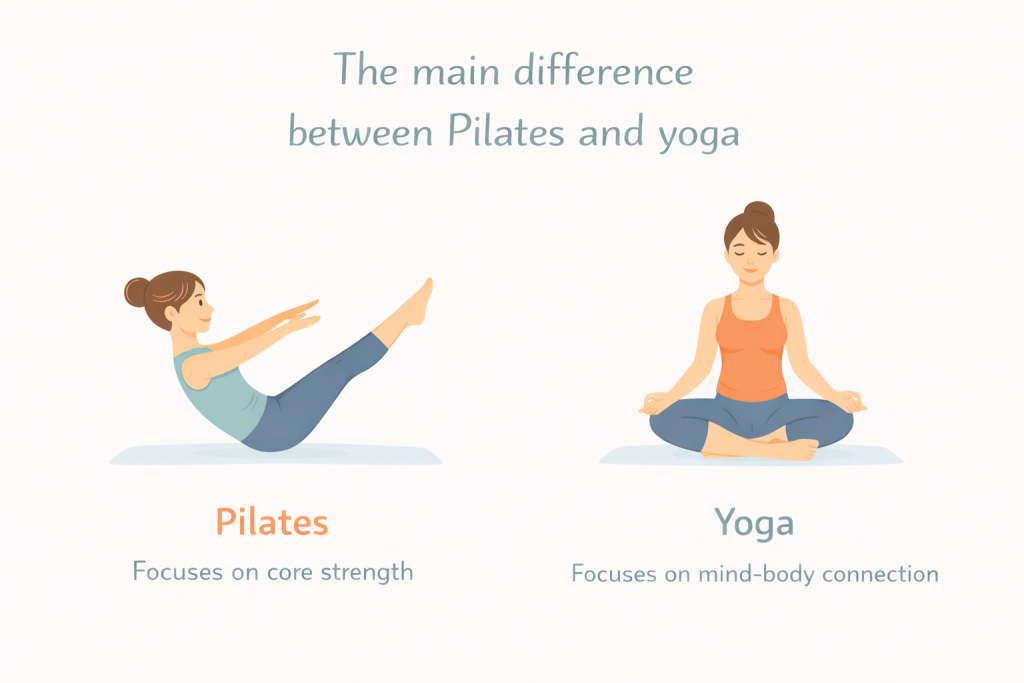
Pilates focuses more on:
- core strength
- posture correction
- muscle control
- body alignment
- strength through movement
Yoga focuses more on:
- flexibility
- balance
- mental relaxation
- breathing awareness
- connection between body and mind
In simple terms, Pilates is often more exercise-based, while yoga often feels more holistic and meditative.
Pilates vs yoga for strength
If your main goal is to build core strength and improve muscle tone, Pilates is often the better choice.
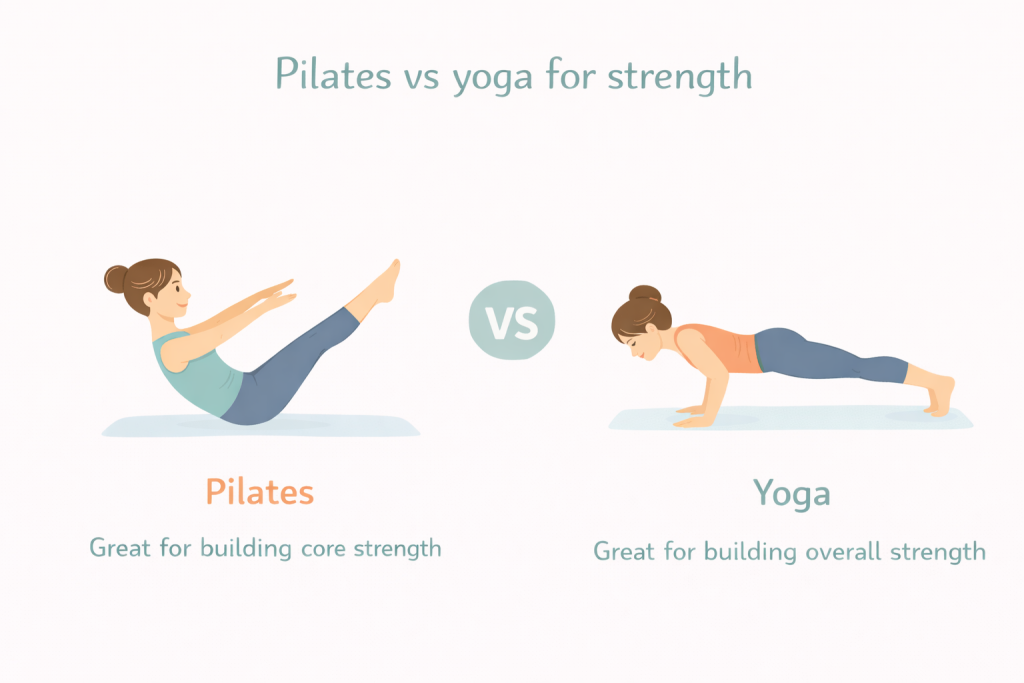
Pilates exercises are designed to activate deep stabilizing muscles. This helps strengthen the core, support the spine, and create a more toned appearance. Reformer Pilates, in particular, adds resistance that can make the workout even more effective for strength and control.
Yoga can also improve strength, especially in styles that require holding poses for longer periods. However, yoga usually focuses less on isolated core work and more on full-body stability.
Best choice for strength: Pilates
Pilates vs yoga for flexibility
If flexibility is your main goal, yoga often has the advantage.
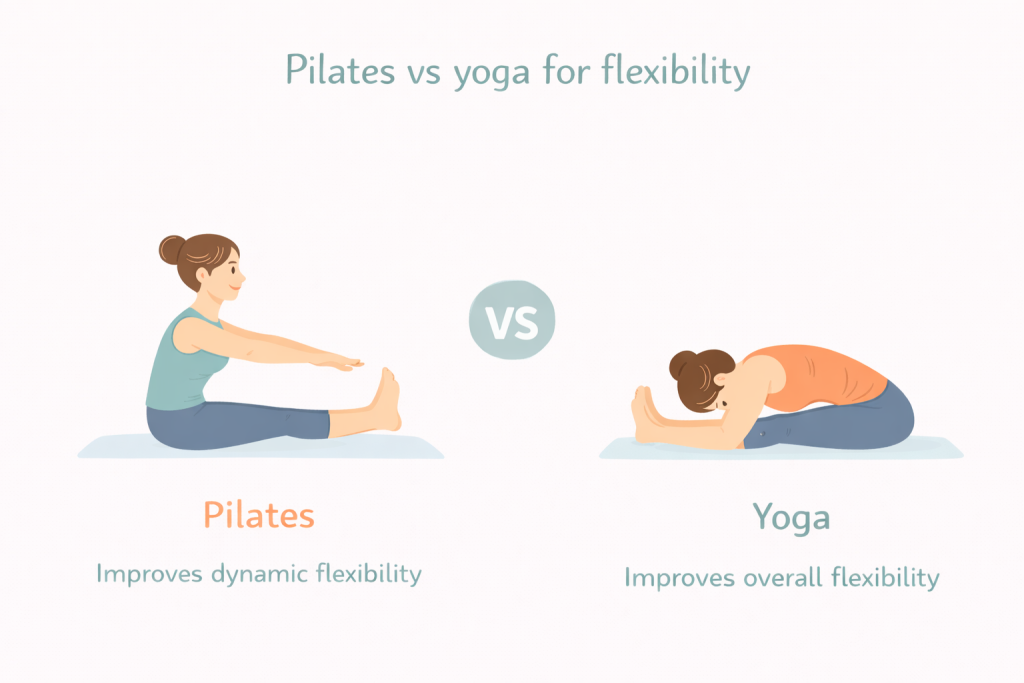
Many yoga classes include poses that stretch the hips, hamstrings, shoulders, and spine. Over time, this can improve mobility and reduce muscle tightness.
Pilates also improves flexibility, but usually in a more controlled and functional way. The stretching in Pilates is often combined with strengthening, which makes it excellent for balanced movement but sometimes less focused on deep flexibility than yoga.
Best choice for flexibility: Yoga
Pilates vs yoga for posture
Pilates is often considered one of the best workouts for posture improvement.
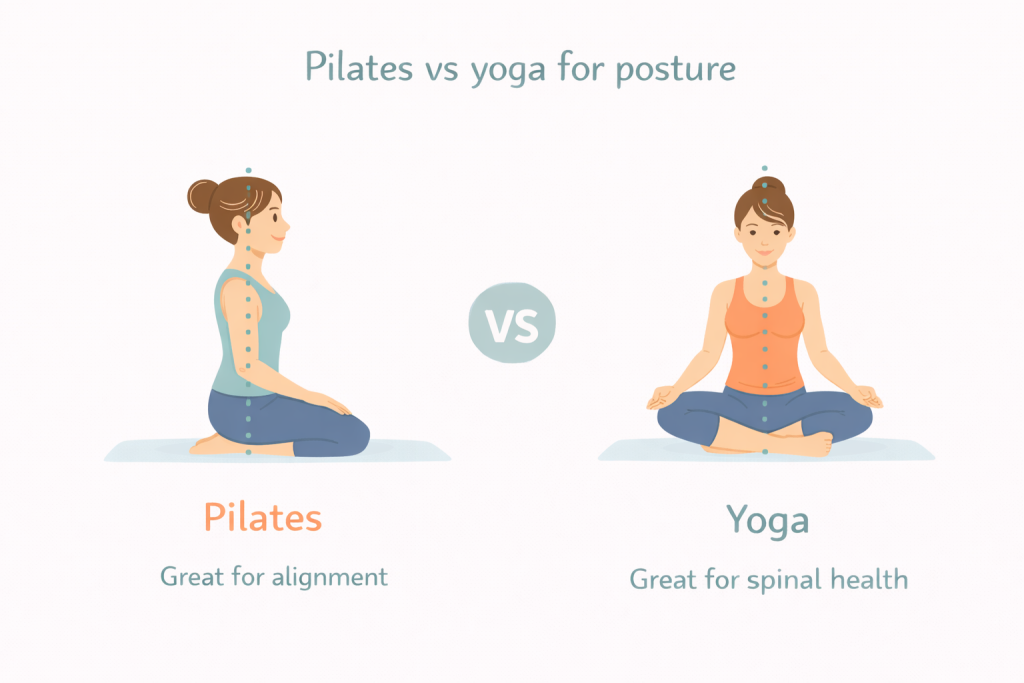
Because Pilates focuses on spinal alignment, core stability, and controlled movement, it can help correct muscle imbalances that come from sitting too much or moving poorly throughout the day. Many office workers and beginners choose Pilates for this reason.
Yoga can also support posture by improving body awareness and flexibility, but Pilates usually provides a more targeted approach for strengthening the muscles that hold the body upright.
Best choice for posture: Pilates
Pilates vs yoga for stress relief
Yoga is often the stronger option for stress reduction.
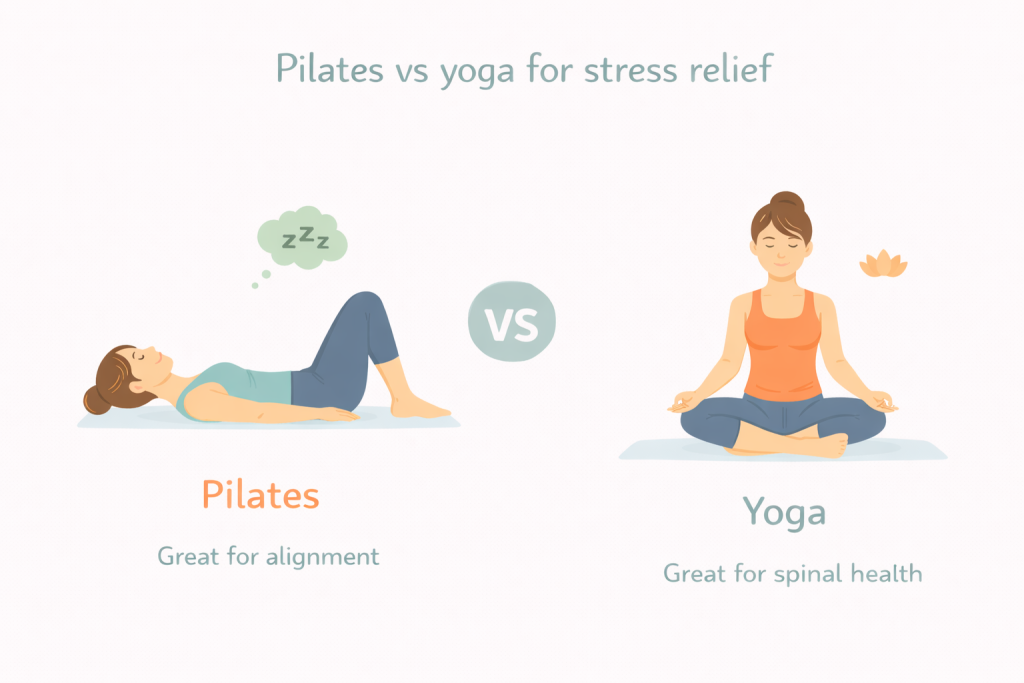
Breathing exercises, mindful movement, and relaxation are central parts of many yoga classes. Some styles include meditation or quiet reflection, which can help calm the nervous system and improve mental well-being.
Pilates can also reduce stress because it requires concentration and controlled breathing. However, its main focus is usually more physical than emotional.
Best choice for stress relief: Yoga
Pilates vs yoga for weight loss
Neither Pilates nor yoga should be viewed only as a quick weight-loss solution. However, both can support a healthy lifestyle.
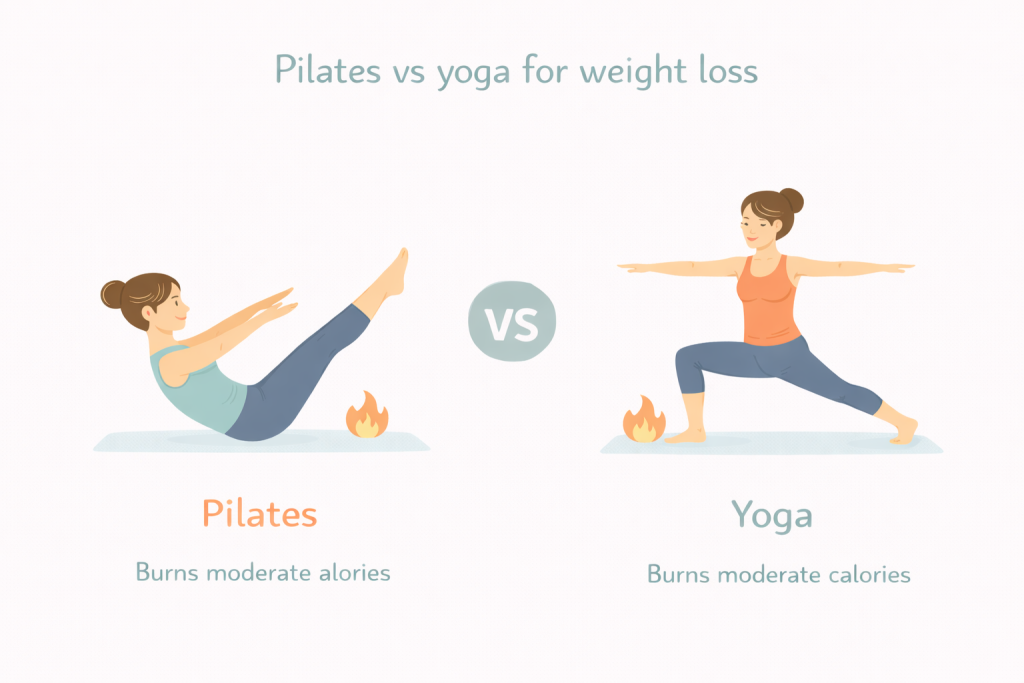
Pilates helps build lean muscle, improve posture, and increase body awareness. A stronger body may help you move more efficiently and stay more consistent with exercise.
Yoga can also support weight management, especially in more active styles, while helping reduce stress-related habits that may affect eating patterns.
If your goal is to reshape the body, tone muscles, and build strength, Pilates may feel more results-driven. If your goal is to improve overall wellness while staying active, yoga can be equally valuable.
Best choice for body toning: Pilates
Best choice for overall wellness: Yoga
Pilates vs yoga for beginners
Both Pilates and yoga can be beginner-friendly, but the better choice depends on what you need.
Pilates is a great option for beginners who want:
- stronger core muscles
- better posture
- a more guided, structured workout
- low-impact exercise with clear technique
Yoga is a great option for beginners who want:
- more flexibility
- relaxation and stress relief
- mindful movement
- a slower, calming exercise style
If someone feels stiff, stressed, and mentally overwhelmed, yoga may feel more natural at first. If someone has poor posture, weak core muscles, or wants to tone the body, Pilates may be the better starting point.
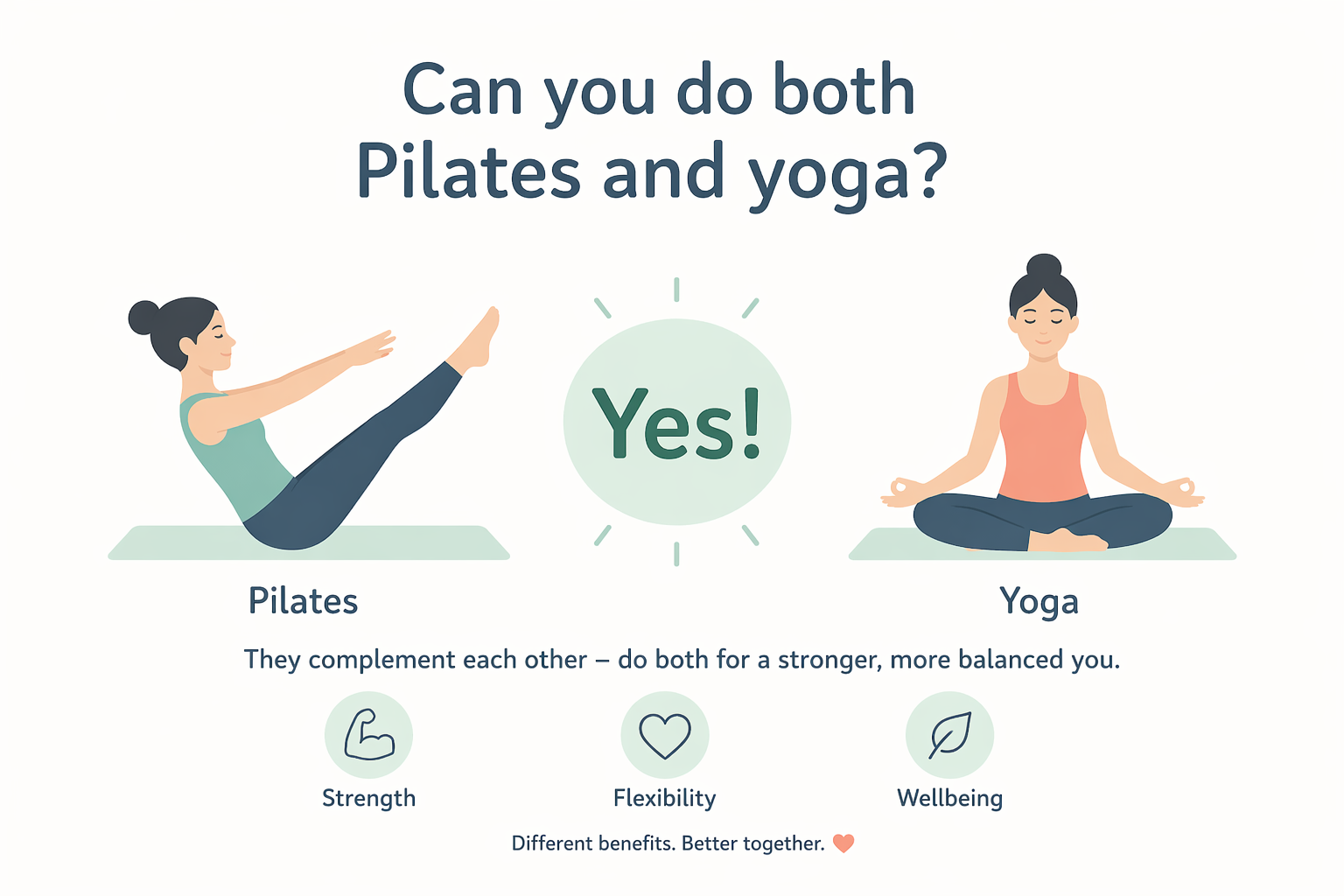
Can you do both Pilates and yoga?
Yes, and for many people, this is actually the best solution.
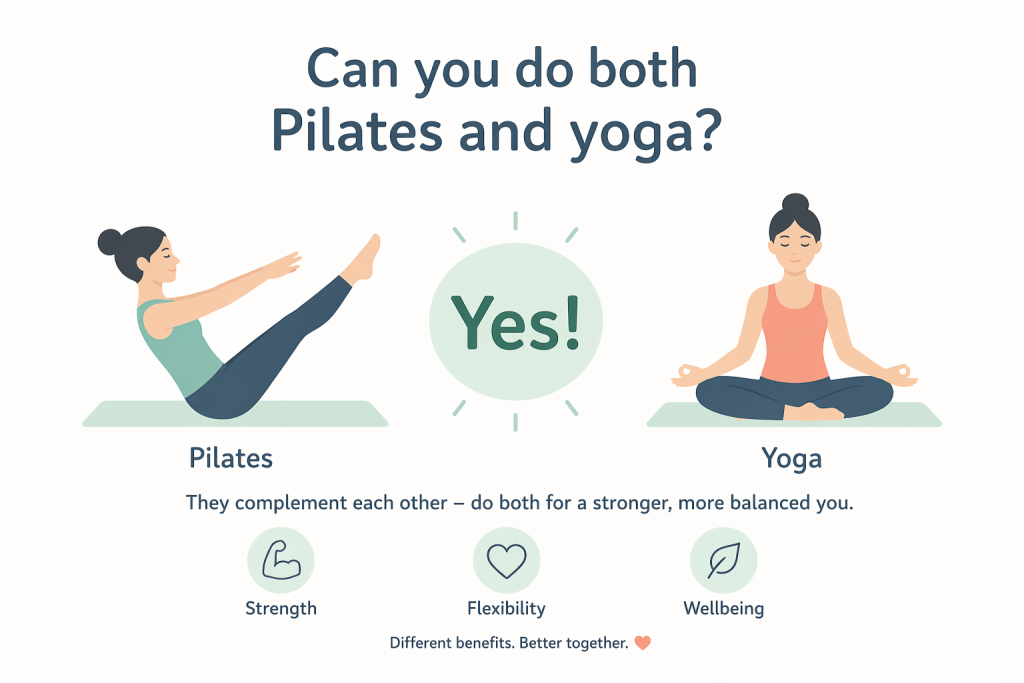
Pilates and yoga complement each other well. Pilates helps build strength, improve posture, and support the body. Yoga helps improve flexibility, reduce stress, and create mental balance.
Doing both can help you enjoy the benefits of each method without needing to choose only one. For example, some people do Pilates two or three times a week for strength and posture, then add one yoga session for stretching and recovery.
Which one is right for you?
Choose Pilates if your goal is to:
- strengthen your core
- improve posture
- tone your body
- reduce back discomfort
- build body control
Choose yoga if your goal is to:
- improve flexibility
- reduce stress
- relax your mind
- practice mindful breathing
- feel calmer and more balanced
Choose both if you want:
- a stronger body
- better mobility
- less stress
- a more complete wellness routine
Final thoughts
Pilates and yoga are both excellent forms of movement, but they serve different purposes. Pilates is usually the better choice for people who want stronger core muscles, better posture, and more body control. Yoga is often the better option for people who want flexibility, relaxation, and stress relief.
The best workout is not always the trendiest one. It is the one that fits your body, your goals, and your lifestyle.
If you are new to movement and want a structured, effective way to improve posture and strength, Pilates may be the right place to begin.